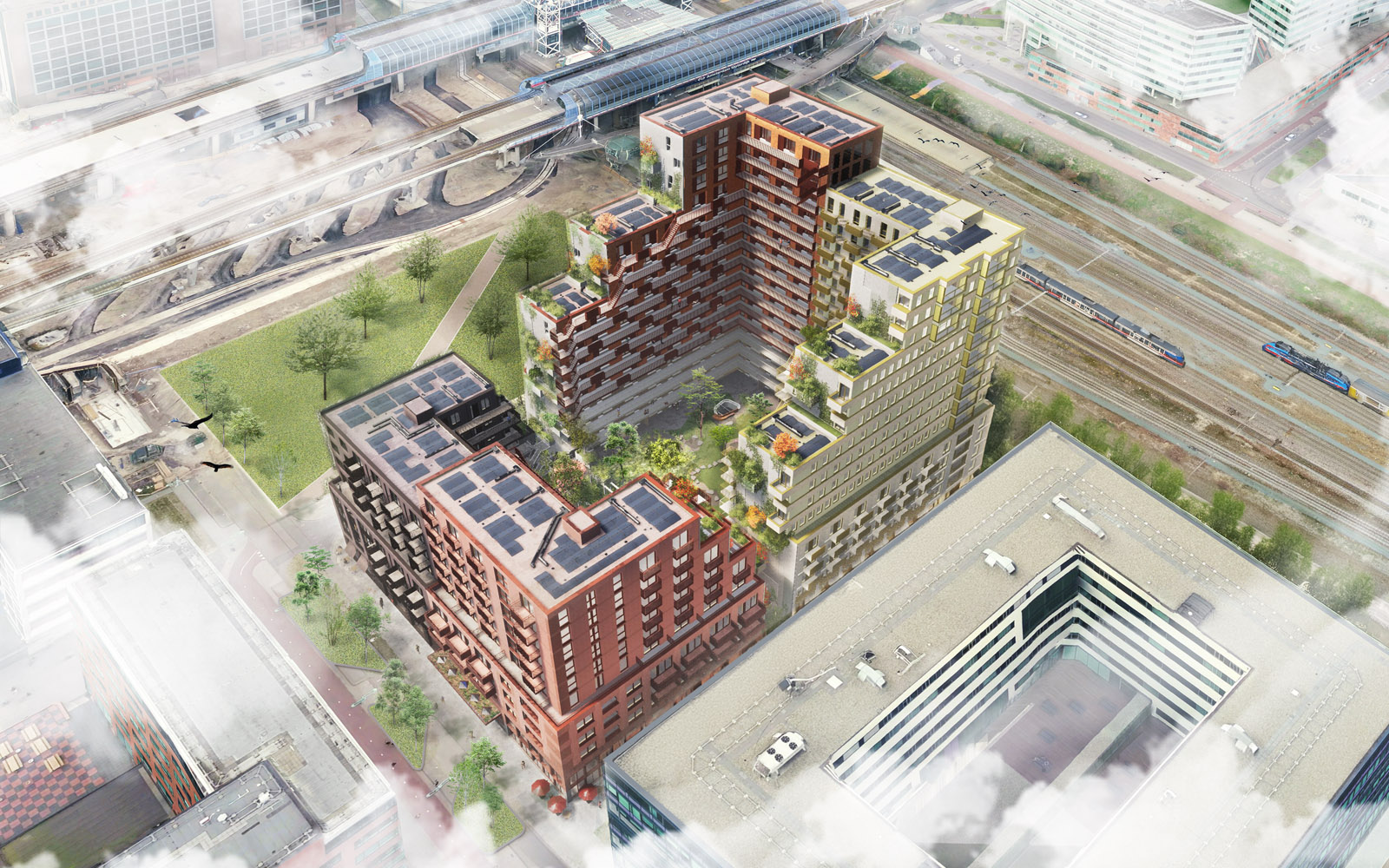
Velo is a new-build development located directly next to Amsterdam Sloterdijk Station. The urban block forms a vertical neighbourhood comprising 390 homes in the social and mid-market rental sectors, a range of commercial spaces, and a public bicycle parking facility for 4,000 bicycles. In the design — created by diederendirrix in collaboration with Civic Public Architecture, Delva Landscape Architects and Hollands Groen — extreme densification is paired with extensive greening, responding to the ambition to create a sustainable and vibrant living and working environment in an area transforming from a impersonal office district into a mixed, nature-inclusive urban neighbourhood.
A complex design challenge
The area surrounding Amsterdam Sloterdijk Station is undergoing rapid transformation. What was once predominantly an office district is increasingly becoming a mixed urban neighbourhood. Our proposal for plot L-Midden is intended to provide this side of the station with a warm welcome and an international appeal.
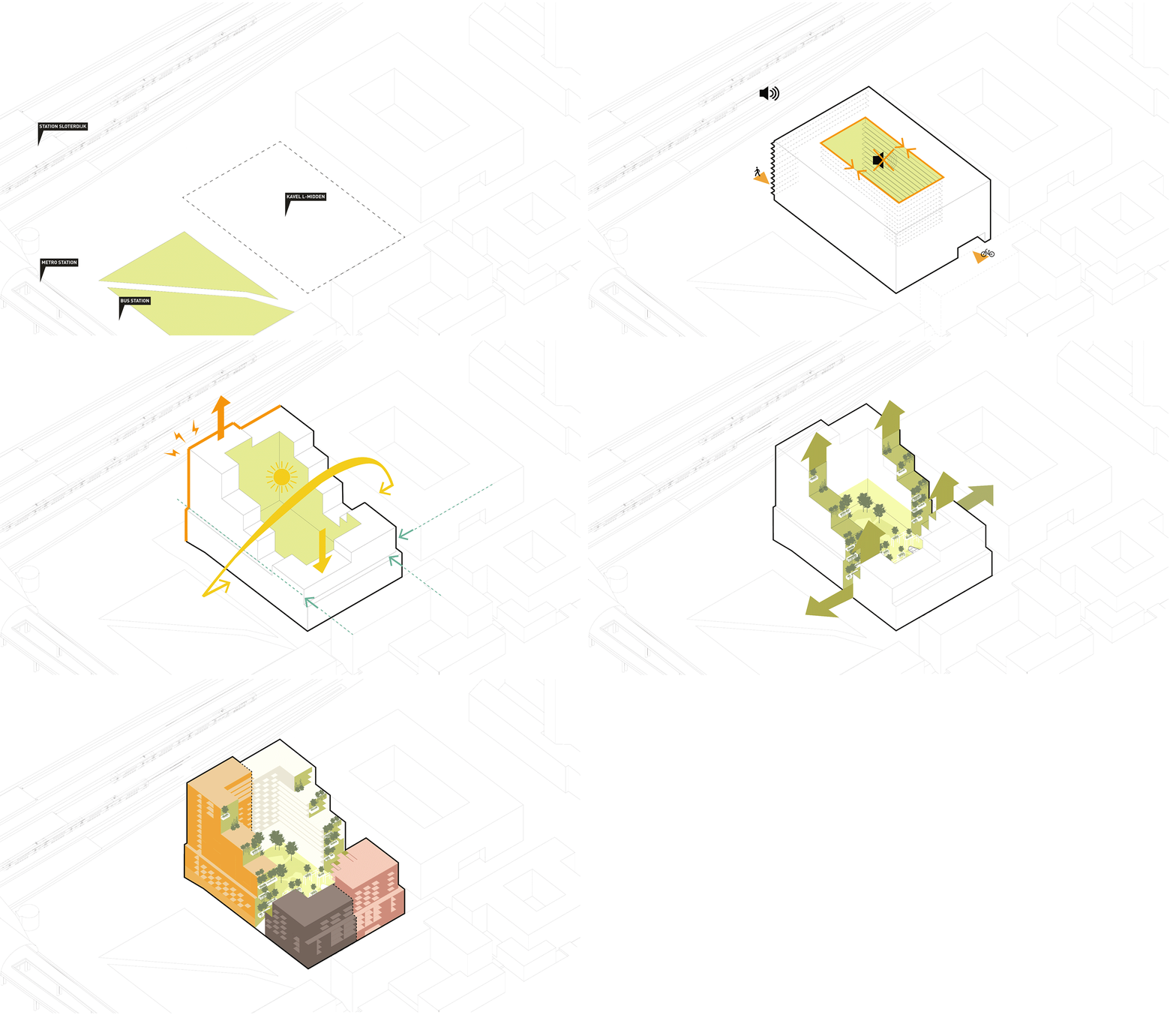
It is a highly complex design challenge. The demand for densification is enormous, while affordable housing remains the top priority. The site is exposed to significant noise pollution from all sides and surrounded by austere office buildings and schools. In addition, harmonising the literally stacked requirements and ambitions of three different clients — de Alliantie Ontwikkeling, the Municipality of Amsterdam, and NS/ProRail — presents a considerable challenge. Diederendirrix is responsible not only for the design and engineering of the building and the bicycle parking interior, but also for coordinating the design process with all parties involved.
A vertical neighbourhood
Urban infill on this scale requires intelligent typological principles. We chose to shape the volume as a stepped courtyard block. The high wing, rising to approximately 60 metres and facing the railway tracks, shields the majority of the noise. The lower southern section allows maximum daylight penetration into the inner garden. The block is divided into four interconnected volumes, each with its own address and architectural identity. Together, they share a communal garden and a collective living room within the plinth.
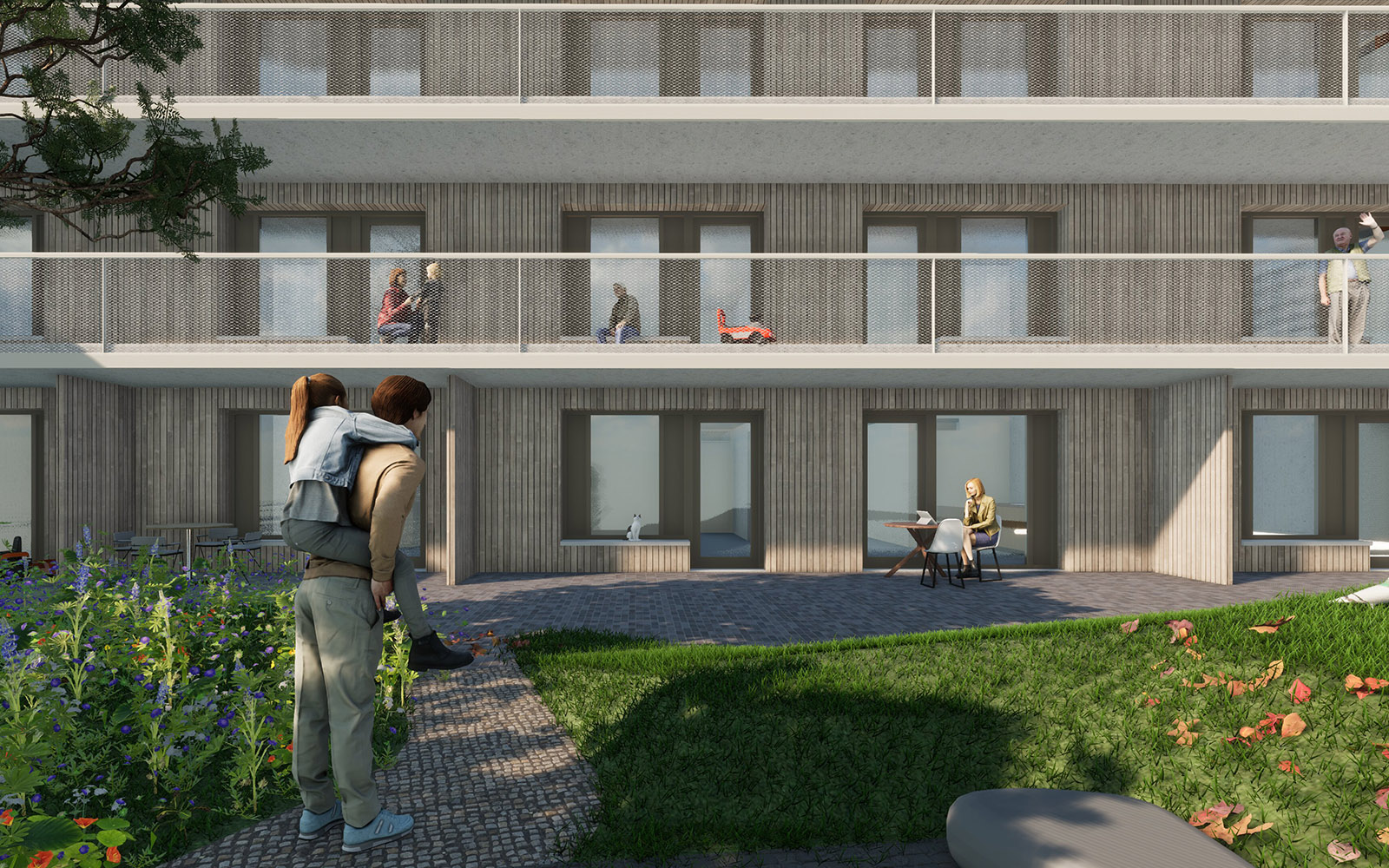
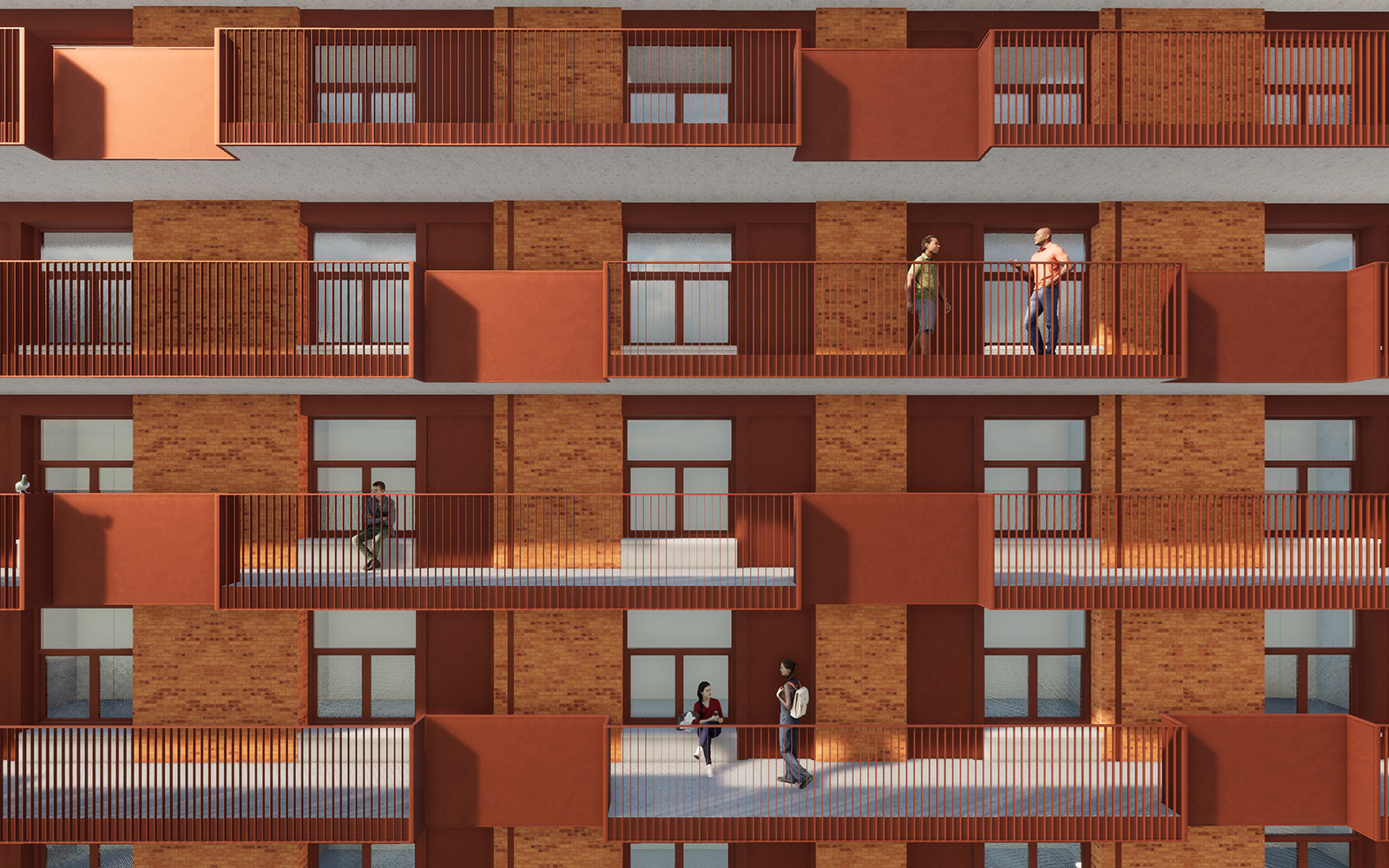
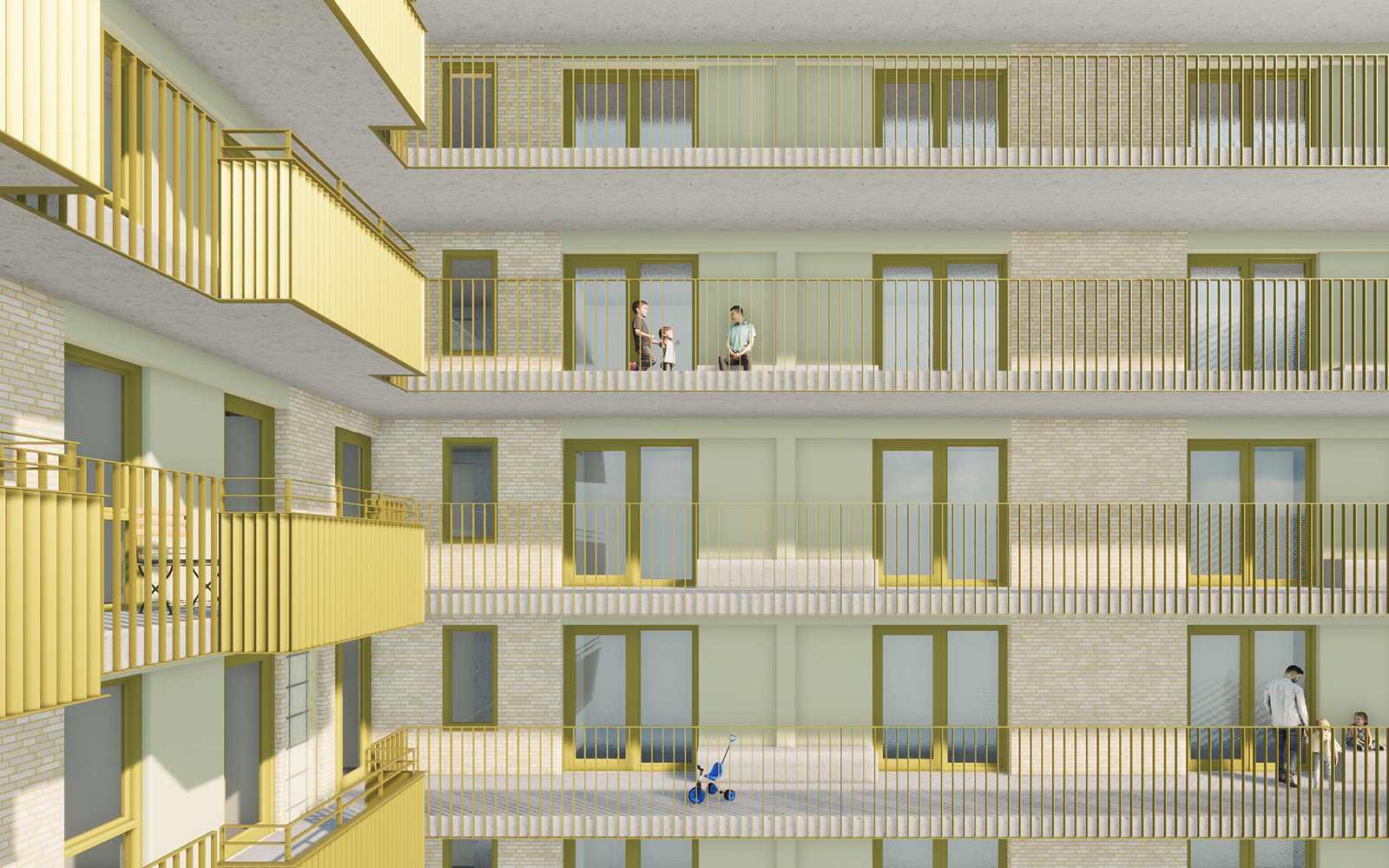
A vertical landscape cuts through the ensemble like an alpine gorge. Here, space is created for urban nature, connecting the public realm through the garden to elevated terraces and access galleries. These galleries are deliberately oversized and designed as residential streets. Balconies, façade benches and large glazed openings extend the living spaces outward and encourage interaction between residents.
A public interior
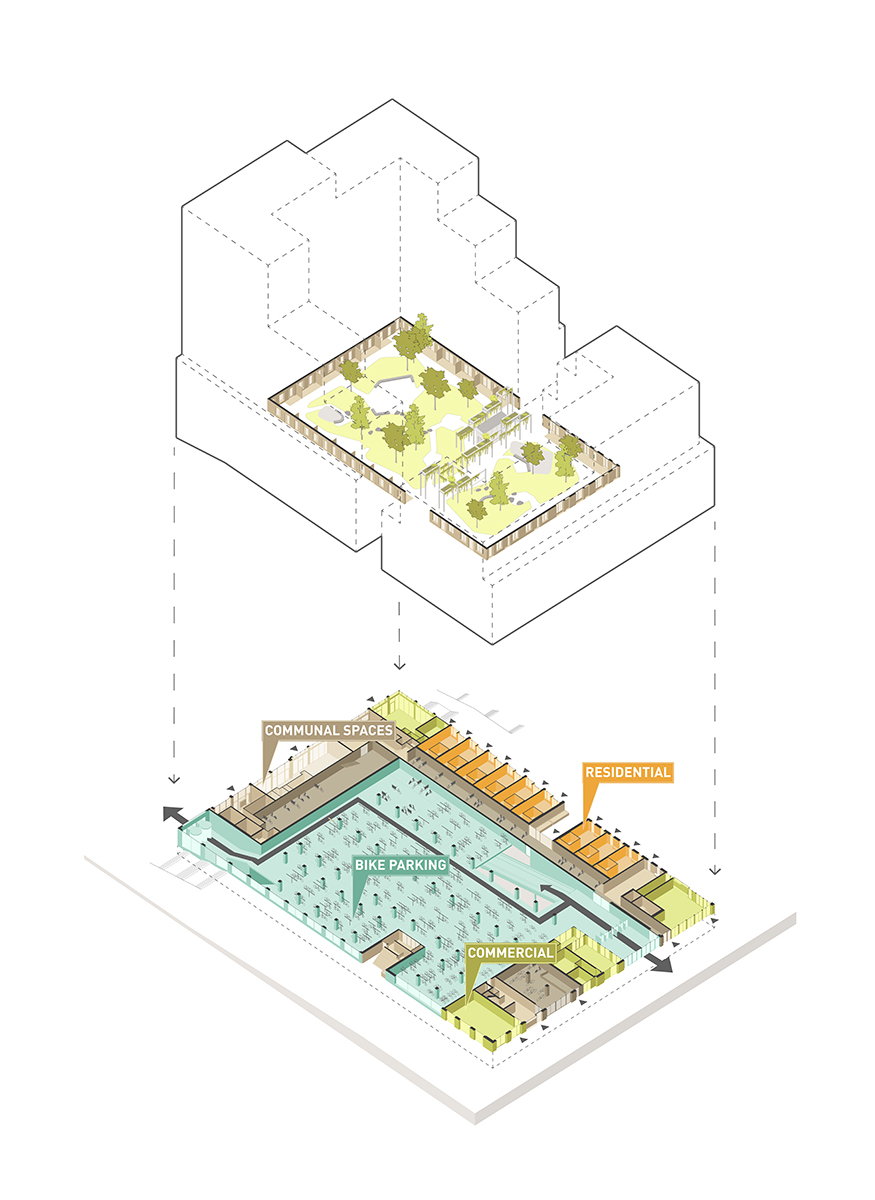
The immense scale of the block is softened by the human scale of the lower levels. Ten townhouses, a communal living room, commercial corner units, and the circulation flows to and from the bicycle parking facility all contribute to activating the streetlevel.
The bicycle parking facility, including a service point, is located on the ground floor and in the basement. This public interior is interwoven with the vertical landscape through skylights, voids and staircases. Daylight penetrates deep into the space from multiple directions. Generous entrances, a clear structure and intuitive routing streamline its use. Large display windows create visual connections with the station and vice versa. This space is designed to accommodate future commercial functions, depending on whether the parking facility is later expanded above or below ground. That is part of an adaptive design strategy that anticipates multiple future scenarios for Sloterdijk Station.
Sustainable densification and greening
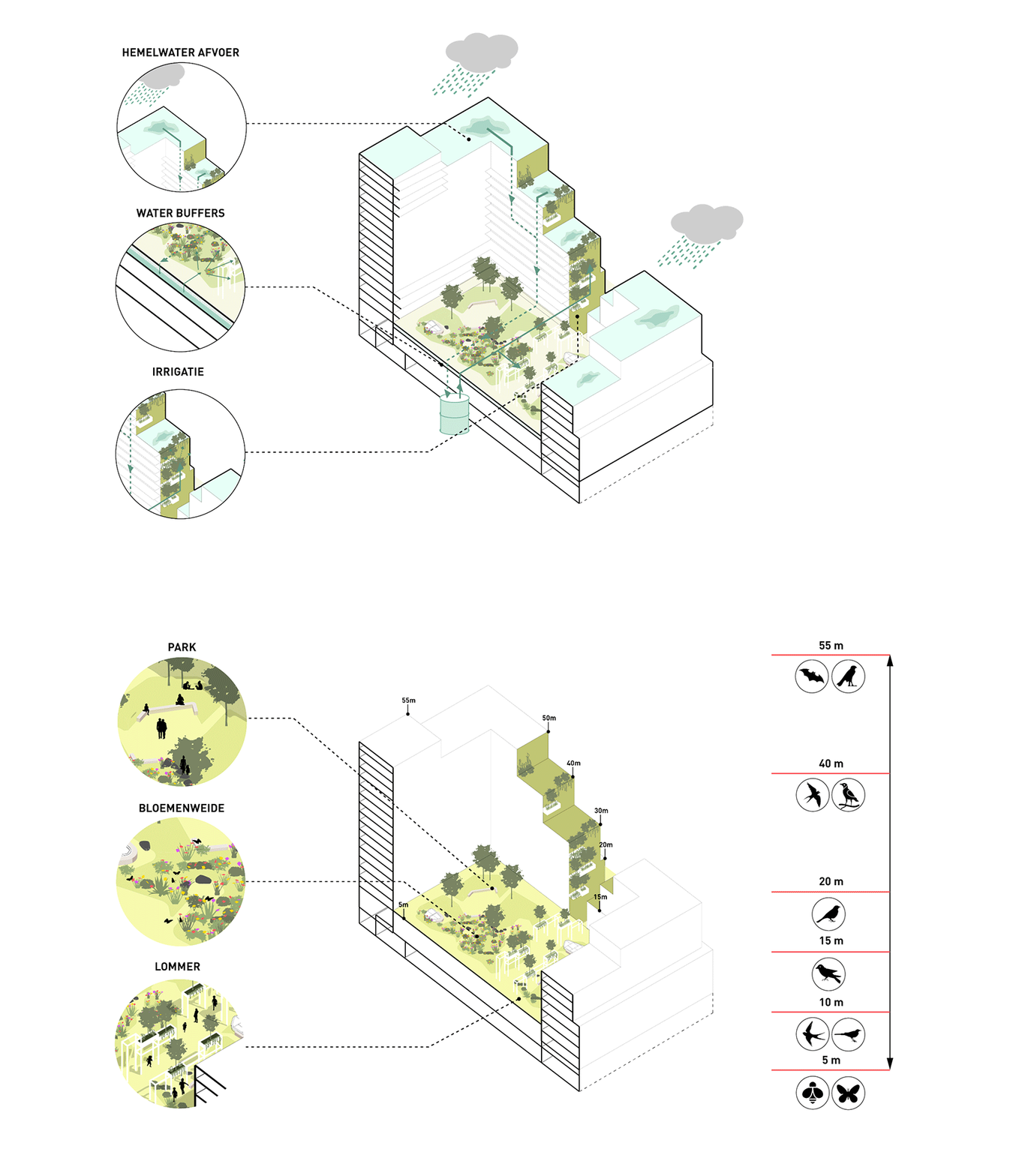
Within the design, extreme densification is directly linked to extensive greening. On a 4,800 m² plot, more than 34,500 m² of floor area and 1,400 m² of planted surface are realised. Fifty trees will be planted throughout the development. To irrigate all vegetation — and to relieve pressure on the sewage system during peak rainfall — a large water retention buffer is installed beneath the inner garden.
The greenery and the building are explicitly designed not only for people, but also for wildlife. While there is ample space for sunbathing, play and communal dining, dedicated habitats are also created for insects, birds and bats. The planting strategy is tailored both to growing conditions and ecological value, including nectar production. The façades of the “gorge” are composed of different types of brick that together imitate a porous rock face. The intention is for these façades to become increasingly wild over time, allowing animals to inhabit them naturally. In addition, nearly one hundred nesting boxes and bat roosts are integrated into the street façades
Open collaboration pays off
Velo is the result of a major collective effort by dedicated designers, committed clients and expert consultants. The only route to success was a simultaneous and integrated approach to the project’s many interconnected challenges. The active and understanding involvement of all stakeholders throughout the entire design process — even when urgencies and interests diverged — proved crucial to achieving the desired result. It is a building full of generous gestures: towards the city, the neighbourhood, and between the individual home and the collective community. Velo brings colour to Sloterdijk.
Project details - Project location
- Teleportboulevard
- Start date
- August 2019
- End date
- In development
- Client
- De AlliantieGemeente AmsterdamNS/Prorail
- Client category
- Governmental Corporation
- Dimensions
- 35000
- Programmes
- Multifunctional Living Working Parking
- Typologies
- Community centre Apartments Family homes Parking lot Shops
- Disciplines
- Architecture
- Type of contract
- New building
- Project partner(s)
- Civic public architectureDelva landscape architectsHollands Groen
- Visualization
Want to know more about this project?
Bram van Ekeren
Senior architect / partner