Westermarkt shopping centre in Tilburg is in need of renewal. The complex of shops and housing has become worn and has lost much of its original spatial quality. Within the area development of the Kenniskwartier, this location is set to grow into an important amenities hub in Tilburg West. By renewing the retail area and adding nearly 800 homes, a high-quality public transport (HOV) line, parking facilities, community functions, and high-quality green public space, we are densifying and strengthening the existing shopping centre.
Together with MTD, diederendirrix developed an urban plan that transforms the ‘Hart van West’ into an attractive place once again for entrepreneurship, living, and meeting.
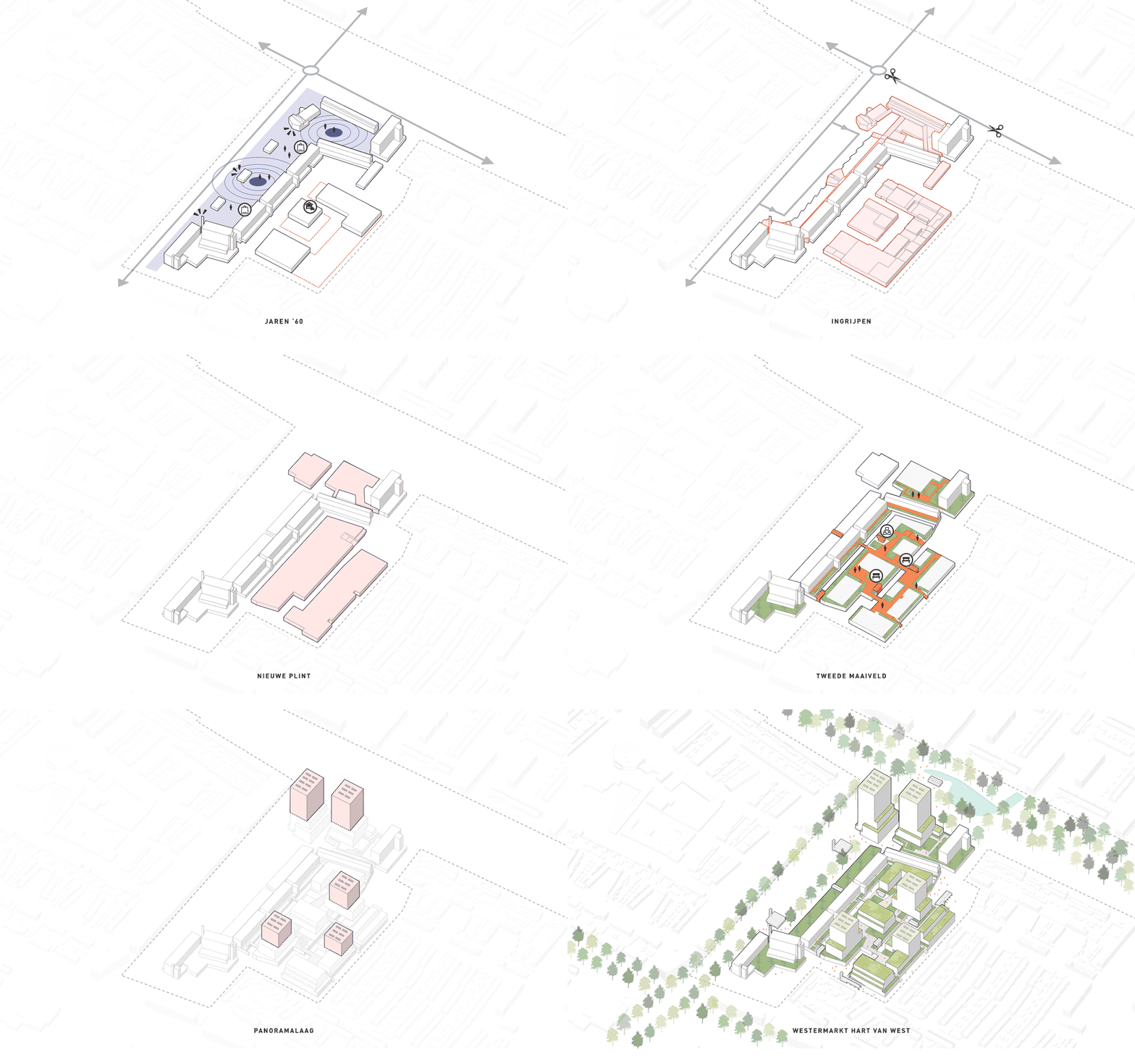
Westermarkt originated around a central market square in the post-war neighbourhood of Het Zand. In the 1960s, a monumental ensemble was added along one side of the square: a long shopping strip with three identical gallery apartment blocks above it, strongly oriented toward the square. This development formed a lively neighbourhood centre. Later expansions initially followed the original principles, but over time were integrated with less care. Gradually, the shopping centre turned into a fragmented and inward-looking cluster with outdated buildings. The square itself transformed into a paved parking area that only functions as a public space during the modest weekly market.
Beating heart of the Kenniskwartier
The Kenniskwartier is a large-scale redevelopment project in Tilburg West. On both sides of the railway, the municipality is working on approximately 10,000 new homes, more green space, and improved connections between the university and the city. The ambition is to create a vibrant, sustainable district where knowledge, living, and amenities come together.
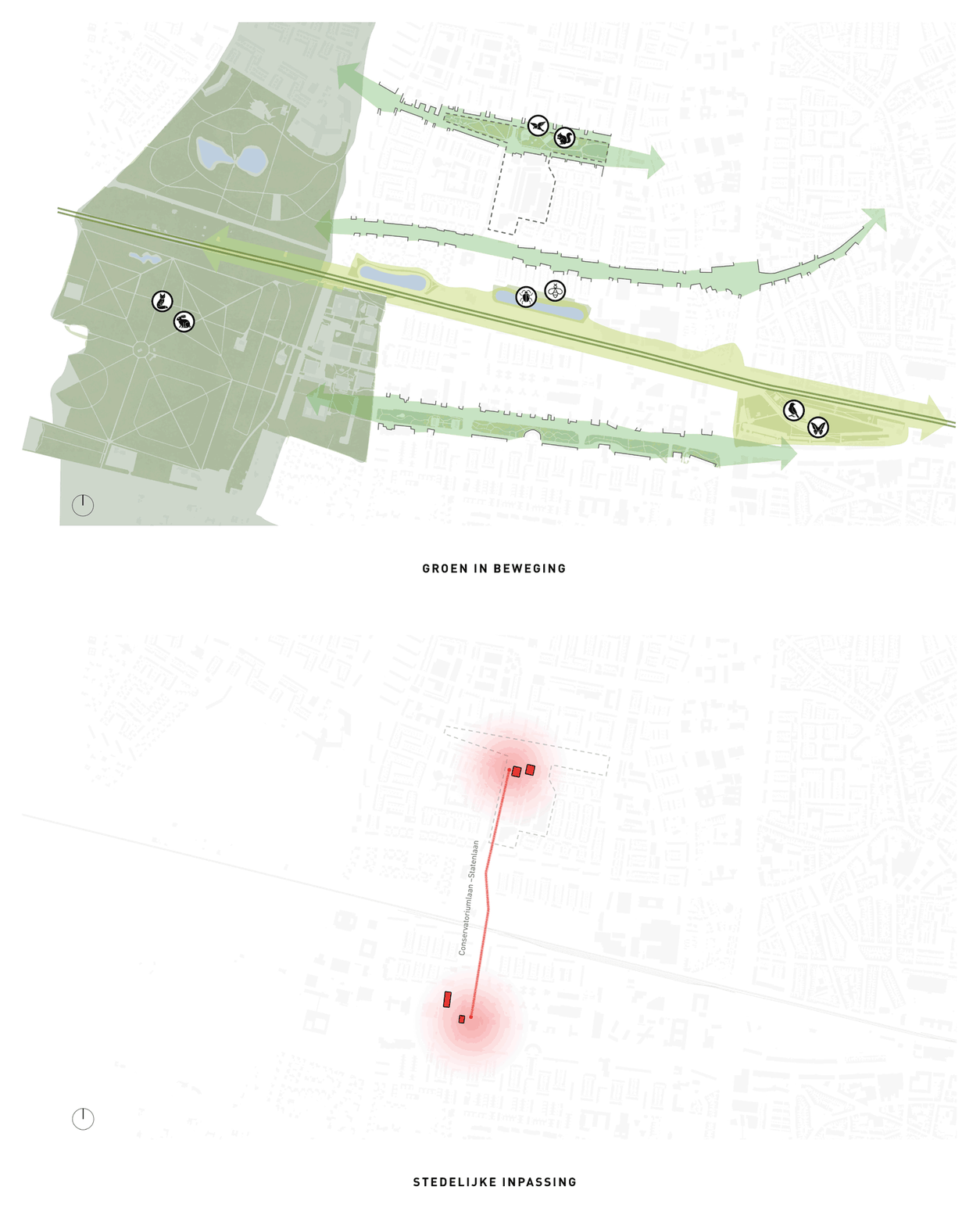
Kenniskwartier with the spatial axis Statenlaan – Conservatoriumlaan
Within this development, the Westermarkt will once again become the beating heart of Tilburg West. We are strengthening the connections with surrounding residential neighbourhoods and improving the relationship with the Westerpark. By renewing and adding shops, streets, squares, and parks, a fine-grained network of attractive meeting places will emerge. New programmes—such as healthcare, culture, education, and childcare—will make the centre relevant to a broader group of users and ensure activity throughout the day. The improvement in the quality of amenities and public space makes it possible to concentrate a significant part of the housing programme of the Kenniskwartier here.
Existing shopping strip with new building ensembles
The plan is based on preserving and renovating the well-functioning parts of the shopping centre, combined with the demolition of outdated or poorly maintained buildings. The original linear structure remains recognisable, with a height accent of approximately 25 metres at both ends. At the front and rear, buildings will be replaced to make room for new construction and a clearer network of routes and places to stay.
At the front, the Noordkop, a new ensemble of shops and housing will be developed. This location marks the northern point of the urban axis along which the metropolitan development of the Kenniskwartier takes place. The Noordkop forms a link between the Westermarkt and the Westerpark, connecting amenities with urban nature.
At the rear, a confusing spatial structure will make way for a second new ensemble: Achter de Westermarkt. Parallel to the existing shopping strip, we introduce a new shopping street that completes the retail circuit and better connects to the surrounding residential neighbourhood of ground-based homes. This creates clear entrances on both sides and a recognisable address for the renewed neighbourhood centre.
Three scales, one coherent whole
The new Westermarkt is structured around three interconnected scales: neighbourhood, intermediate level, and city. At the neighbourhood scale (up to approximately 10 metres), street life takes centre stage. Shops, entrances, and short passages create liveliness and clarity. New squares and meeting spaces connect residential streets, the Westerpark, and the shopping loop into an inviting centre that is accessible from all sides. Strategically placed pavilions strengthen the public realm with additional programmes and recognisable places. Clear stairways and access points connect street level with the higher layers, allowing the centre to feel public and accessible even vertically.
The intermediate level (approximately 10 to 25 metres) relates to the scale of the post-war apartment blocks in the surrounding area. Here, the principle of ‘maximum contact with greenery’ is central. Tree canopies and a green second ground level form a new public space from which apartments and community functions are accessed. This level offers a pleasant living and staying environment between neighbourhood and city.
At the urban scale (from approximately 25 metres), height accents mark the amenities hub within the urban landscape. They strengthen orientation and enrich Tilburg’s skyline. Panorama apartments introduce a new residential quality with views over the park, the city, and the Kenniskwartier.
Strengthening urban nature
The area is primarily designed for pedestrians. New routes connect to existing paths and link the centre, the park, and surrounding neighbourhoods. Parking is largely accommodated underground, freeing up space above ground for high-quality public space, greening, and climate adaptation. The new urban greenery forms a single ecological structure together with the Westerpark. Roof gardens, terraces, and green squares contribute to biodiversity, water retention, and cooling. In this way, the Westermarkt develops into a vibrant, green, and future-proof neighbourhood heart: a meeting place where urban dynamics and urban nature come together.